Discharge Time: The Hospital Breakout That Turns Into a Relentless Escape
- Landon White
- November 23, 2026
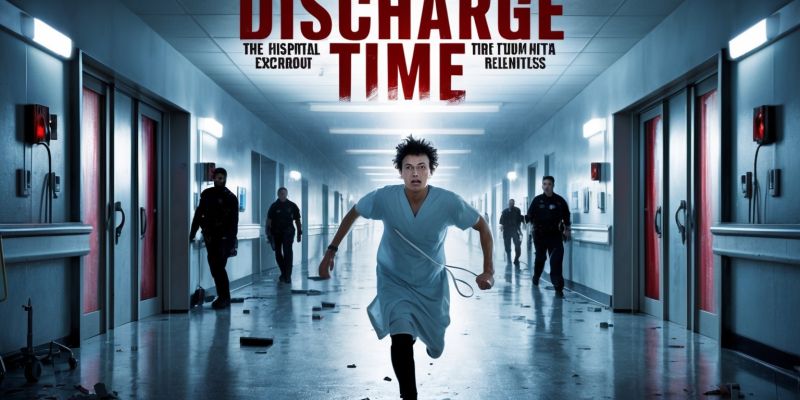
Discharge Time stands out as the closing mission of Chapter 1 in GTA 6 because it blends story tension, frantic movement, and shifting control between Lucia and Jason in a way that keeps the entire sequence in motion. What begins as a desperate rescue inside a hospital quickly turns into a long escape full of close calls, armed resistance, and improvised survival. The mission is crafted to leave you sensing the strain mounting from the very first step through the hospital doors, while also testing how well you can respond when the game repeatedly changes pace and perspective.
Entering a place that should feel safe
The mission opens with Lucia deciding that hesitation is no longer an option. Jason is injured and being treated in the hospital, but Lucia fears the people responsible for the earlier attack may already be hunting for him. That concern sets the tone immediately, since the hospital is supposed to be a place of care, yet here it becomes a site of danger and secrecy. The player’s first task is simple on paper: get inside, avoid attention, and locate Jason. In practice, the atmosphere makes every hallway feel suspicious. The game uses this setting to create contrast between clinical calm and criminal urgency, which makes the mission memorable before the action even begins.
Following the path through the ward
Once inside, the mission directs you toward the second floor, where the route becomes more specific and slightly more investigative. You pass a receptionist and are instructed to follow the pink line past the doorway to keep moving further into the hospital. That detail gives the sequence a strong visual identity, because the line acts like a subtle guide through a location that would otherwise feel easy to get lost in. Shortly afterward, a nurse with curly brown hair becomes another key waypoint, steering you toward Room 203. This section is not simply about navigation; it introduces the hospital as a semi-open space where characters and environmental cues matter. The movement is measured, but the tension keeps rising.
Room 203 and the sudden shift in tone
When Lucia finally reaches Room 203, the mission pivots sharply from cautious exploration to direct action. Jason is freed from the room, and the escape begins almost immediately. This is the point where the game changes from a story-driven stealth-like approach into a hard-edged confrontation. The room itself functions as a threshold, a quiet pocket before the chaos spills in from outside. The contrast is effective because the player barely has time to adjust before enemies appear at the door. The pacing here is especially strong, since the moment of relief is intentionally brief, and that briefness makes the following firefight feel even more urgent and unstable.
Jason’s first stretch under pressure

After Lucia breaks Jason out, control shifts to Jason, and the mission rapidly becomes about staying alive while moving through hostile corridors. Enemies appear almost instantly, forcing constant gunfire as Lucia guides the escape. The experience feels less like a set-piece and more like a controlled panic, with the player pushed along through tight interior spaces while threats keep arriving from multiple angles. The hospital setting adds to the challenge because hallways, lifts, and doorways create constrained sight lines. Every shot matters more when the environment is so narrow. This part of the mission is built around momentum, and the player is expected to react quickly without ever fully stabilizing the situation.
Lucia takes the wheel of the escape
At one point, Jason is forced out of the wheelchair, and the mission switches back to Lucia for a brief but important sequence. She picks up an SMG and responds to an attacker through quick time events before handing the weapon back. This temporary change in control is one of the mission’s defining features because it keeps the player alert and prevents the action from settling into one rhythm. Lucia feels resourceful here, acting with urgency and precision while Jason is physically limited. The moment also reinforces the partnership at the heart of the chapter, showing how both characters contribute in distinct ways. One is moving, the other is covering, and the game plays with that balance repeatedly.
Keeping pace through the corridors
After the brief interruption, the escape resumes with Jason once again firing while Lucia drags him through the hospital. More attackers show up, and the sequence becomes a cycle of movement, cover, and pressure. Another wheelchair is found, which gives Jason some mobility again, but the safety is temporary. The hospital’s corridors are used almost like a gauntlet, where each new section introduces fresh angles, fresh enemies, and another reason not to relax. The design keeps the focus on forward motion, and the player rarely has time to think about anything except survival and positioning. This constant push forward makes the mission feel longer than a standard fight, because the environment itself becomes part of the challenge.
Room clearing and split control
The escape eventually leads into a room where Lucia pushes Jason into cover and takes over the fight. This is another clever use of character switching, because the game keeps alternating who is exposed and who is protected. As Lucia, the player must continue shooting the attackers without hesitation, maintaining the sense that the situation is only barely under control. The room acts as a temporary defensive pocket, but not a true safe zone. Enemies continue to apply pressure, and the mission’s structure ensures that the player is always reacting instead of settling into a routine. The alternating roles make the action feel collaborative, and the sequence benefits from that constant handoff between characters.
More resistance before the final break
As the mission progresses, control returns to Jason, and the firefight expands again. This repetition might sound straightforward, but the game uses it to heighten fatigue and uncertainty. The enemies keep appearing, the route ahead remains unstable, and the sense of escape grows more fragile with each step. By this stage, the mission has established its rhythm: Lucia pushes, Jason covers, the enemy closes in, and the pair keeps moving. That structure gives the sequence a relentless feel. Instead of offering a single decisive battle, the game stretches the danger across multiple spaces, making the player feel the strain of prolonged pursuit rather than a one-off ambush.
Arriving at the ambulance bay
The hospital escape reaches a crucial turn when Lucy leaves Jason alone long enough to find a vehicle, and that decision immediately creates a new problem. Jason is left exposed, which gives a dirty cop the opportunity to confront him. The resulting quick-time event adds another layer of urgency, because the player must respond before the situation gets worse. Once the confrontation is dealt with, Jason gets hold of a shotgun and braces for yet another wave of opponents. The ambulance bay is a strong setting for this part of the mission because it feels like a transitional zone between confinement and open escape. It is wide enough for vehicles, but still boxed in enough to feel dangerous.
Close-quarters defense with a shotgun
With the shotgun in hand, Jason is asked to hold his ground against more enemies until Lucia returns with transport. This segment changes the combat feel noticeably, since the weapon and the space around it encourage a more forceful, short-range style. The player is not just defending anymore; they are trying to survive a bottleneck while waiting for the next escape stage to arrive. The game makes a point of delaying Lucia’s return, which keeps the player in a vulnerable state for longer than expected. That delay heightens the payoff when she finally drives into the bay, because the arrival feels like a genuine rescue rather than a scripted convenience. The whole scene carries a sense of frantic timing.
Sliding into the ambulance and changing the rhythm
Lucia’s return immediately changes the structure of the mission again. She gets Jason into the ambulance and injects him with adrenaline, giving the moment a dramatic and almost theatrical energy. The boost changes stats and signals a fresh phase of the escape. From here, the player shifts into a moving defense sequence, shooting from the back of the ambulance while the vehicle tears away from the hospital scene. This is one of the mission’s more distinctive gameplay beats because it combines mobility, aim management, and spatial awareness. The player is no longer fighting from a fixed point; instead, they are dealing with motion, distance, and instability all at once, which makes the entire sequence feel more dynamic.
Using Focus Mode against the chase
The ambulance sequence becomes much easier to manage when Focus Mode is used, since it slows time and helps with precision shots. The game encourages you to target vulnerable parts of the pursuing vehicles, especially the wheels, which creates a satisfying tactical rhythm amid all the chaos. Rather than simply spraying bullets, the player is rewarded for accuracy and composure. The chase includes a large number of cop cars and enemy vehicles, so focus becomes more than a convenience; it is almost a necessity for keeping the pressure from becoming overwhelming. This section is also notable for how it transforms the tone of the mission. What started in quiet hospital halls now unfolds as a high-speed pursuit filled with motion, sound, and constant threat.
Pressure, choice, and the criminal profile system
As the pursuit continues, one of the mission’s more interesting systems becomes relevant: the Criminal Profile. The game rewards a cleaner escape if you avoid unnecessary casualties among the police, which adds a moral and mechanical layer to the action. That choice does not make the chase easy, but it does give players a reason to aim carefully and think beyond simple survival. In a mission packed with tension, this system offers an additional challenge that fits the overall design. The player can approach the scene with restraint or aggression, and either path changes the sense of accomplishment. The mission uses this to deepen engagement, turning the final escape into more than a standard action sequence. It is part firefight, part decision-making under pressure, and part test of endurance against a relentless pursuit.