Rethinking Role-Playing: Breaking Free from the Destined-Hero Mold
- Landon White
- October 09, 2026
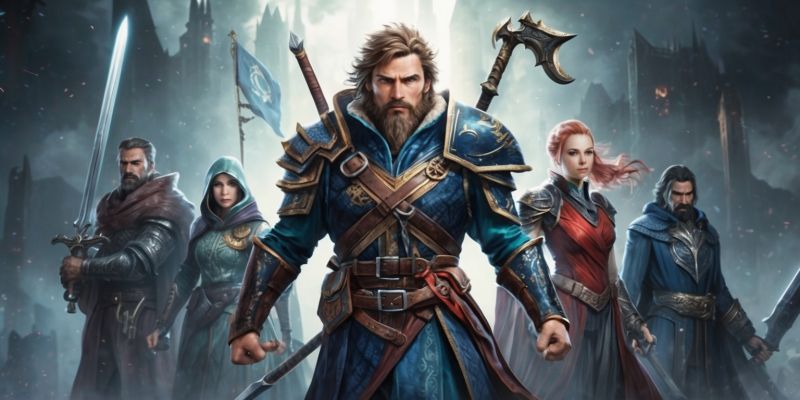
This discussion explores a perspective from a developer Renowned for his involvement in a project highly celebrated by critics historical RPG. He expresses his discontent with many role-playing titles that rely too heavily on a formula designed to make players feel exceptionally empowered without much depth, a trend he finds increasingly overused.
The co-founder of a well-known studio shared that he has grown weary of games that constantly present the player as a destined hero who must complete a monumental quest. He finds this approach unimaginative and repetitive, noting that while he personally enjoys the role-playing genre, the overused concept of a grand, singular savior has lost its appeal. According to him, there are many gamers who desire a departure from this tired narrative structure.
He observed that the prevailing tendency in… game design seems tailored to a younger audience, perhaps those in their mid to late teens, who gravitate toward experiences that provide an alluring, larger-than-life escapism. His observation suggests that while such games satisfy a particular demographic, the broader adult audience is ready for more innovative and mature storytelling.
Contemplating the industry's current landscape, he… remarked on how widely used mechanics and design choices have led to a stagnation in creativity. He mentioned that major companies tend to reuse familiar formulas instead of taking financial risks on new ideas. For instance, he acknowledged the precise execution and refinement seen in the work of a prominent publisher, which is evident in smooth gameplay and standout animations, yet he hopes that this level of quality will eventually be channeled into more original concepts.
He recalled the excitement of early installments from several famous franchises, noting that initial releases offered a refreshing experience that eventually felt repetitive after numerous sequels. His views ignite a conversation about the need for fresh approaches in an industry that has long relied on established formulas. Key points of his argument include:
- A weariness with the overuse of the destined-hero narrative.
- The tendency for contemporary RPGs to cater primarily to a younger crowd.
- A call for more innovation and calculated risks in game design.
- An appreciation for technical craftsmanship paired with a desire for original storytelling.
He also mentioned his hope that upcoming major releases might set new standards, not only in narrative depth but also in justifying higher game prices through daring new directions. With a history of accolades for his studio's previous efforts, His remarks fulfill a dual role, functioning as both incisive criticism and… a challenge for the future of the role-playing genre.